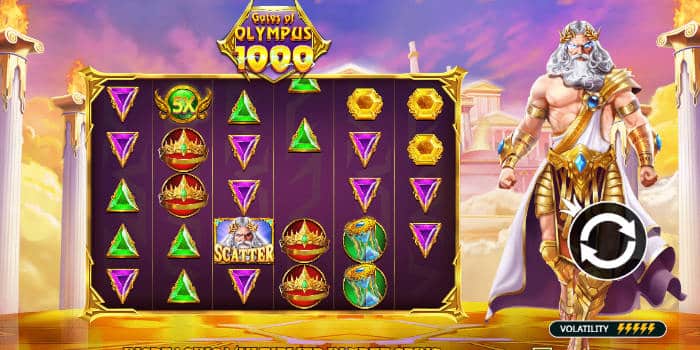
Gates of Olympus draws its entire identity from Greek mythology, and the theme influences every mechanical choice in the game https://gatesolympus.in/. The reels sit inside a temple bordered by marble columns and floating clouds, while Zeus himself appears as the central figure who can increase wins during any spin. This setting is not merely decorative; the symbols, sound cues, and win animations all strengthen the idea that divine intervention can alter the outcome at any moment. Players who grasp how the mythological layer connects to the actual mechanics will spot opportunities faster than those who treat the visuals as background noise. The temple backdrop also changes lighting during big wins, shifting from daylight to a golden dusk that signals a multiplier chain is about to settle.
Bonus Spin Extra Round System
Getting four or more scatter symbols, shown by the temple gates, awards ten starting free spins. During the round every multiplier bolt that appears gains an extra life and remains the grid for the rest of the feature. If a bolt hits five hundred times it remains until the free spins end, creating the potential of a permanent high multiplier that applies to every following tumble. Retriggers happen whenever three additional scatters appear, granting five more spins without clearing the collected multipliers. The round thus pays off patience; the more extended the feature lasts, the larger the cumulative multiplier ceiling grows. A single five-hundred-times bolt that lasts through eight or nine spins can convert even low-value gem clusters into substantial returns.
Retrigger frequency usually grow once two or more high-value bolts are already on the grid, because the larger multipliers generate more noticeable win celebrations that hold players engaged. The game doesn’t display a visible counter for remaining spins, so attention to the bolt count becomes the main indicator of how much longer the round may continue. When three or more bolts stand above one hundred times, the remaining free spins often produce the session’s greatest single payout, even if the actual cluster sizes continue to be modest. Tracking these bolts helps us assess whether extending the session after the feature ends is probably to recreate the same level of excitement.

Stake Range and Stake Adjustments
Stake sizes typically begin at 20 rupees per spin on India-oriented platforms and increase in increments of ten rupees until hitting the local equivalent of five thousand rupees. The broad range permits both occasional players and high-limit users to find a suitable level without altering games. Because the tumbling feature can yield numerous wins from one wager, changing the bet mid-session impacts every later tumble equally. Gamers frequently begin at the lower end to watch the occurrence of Zeus interventions before committing bigger sums during a session that already displays active multipliers. A jump from 20 rupees to 50 rupees can amplify a one-hundred-times multiplier from a moderate payout into a payment that pays for an entire evening’s play.
In-session wager adjustments also interface with the highest payout ceiling. Raising the bet after a big multiplier has already triggered endangers hitting the 5,000x cap earlier, which can make later tumbles unpaid. In contrast, reducing the bet after a lengthy losing streak diminishes the price of further experimentation while the spin pattern remains quiet. We have discovered that a single wager modification at the thirty-spin stage, according to bolt frequency, often generates a smoother bankroll curve than multiple small tweaks throughout the session.
Reels, Positions and Paths to Win
The layout uses a six-column five-row grid that compensates through a scatter-pay system as opposed to fixed lines. Any eight or more matching symbols at any spot on the screen create a win, and the symbols then explode to let new ones fall into place. This tumble mechanic continues until no new combinations appear, which means a single paid spin can generate several consecutive wins. Because every symbol position matters, the total number of ways to win reaches well above 100 000 combinations on every spin. Players should watch the cluster size carefully; eight low-paying coins may give back less than five high-paying helmets, so symbol value counts as much as quantity. When a tumble chain reaches four consecutive drops, the screen briefly enlarges to highlight the growing multiplier trail, giving players an instant visual cue that the payout is climbing.
The omission of traditional paylines also changes how we evaluate near-misses. A cluster of seven matching symbols seems close to a win, yet the game regards it as a complete miss. what to know Understanding this distinction stops the common mistake of reading momentum into a result that the math does not support. Over longer sessions the scatter-pay model has a tendency to produce more frequent but smaller clusters in the base game, while the larger payouts come when multipliers land inside those clusters. Keeping a mental note of how often eight-symbol groups appear helps us judge whether the current reel rhythm is running hot or cold.
Player Return and Volatility Profile
The listed return-to-player percentage rests at 96.5 percent, which puts the game marginally above the prevailing average for video slots. That figure is computed over millions of spins, so short sessions can deviate sharply. Volatility is rated high, indicating the distribution of outcomes favours infrequent but larger payouts. During testing, dry spells of twenty to thirty spins are common, yet the same session can deliver a multiplier chain that goes beyond one hundred times the stake. Players who enjoy steady small wins may feel the swings uncomfortable, while those who tolerate variance can match their session length with the mathematical rhythm of the title. We have observed sessions where the first twenty-five spins returned nothing, only for spins twenty-six through twenty-eight to yield a combined payout above eighty times the stake.
Because the RTP is an average, the game can appear stingier or more generous relying on the chosen stake level and the timing of Zeus interventions. A player who starts during a period of frequent lightning bolts will encounter a higher effective return than someone who plays a stretch of empty spins. Tracking the interval between bolt appearances over the first fifty spins gives a practical feel of whether the session is deviating above or below the theoretical curve. Adjusting expectations correspondingly helps us decide whether to extend the session or walk away before a natural variance swing diminishes the bankroll.

Multiplier Wilds and Chance Events
When any spin begins there is a chance that Zeus will cast lightning bolts onto the grid. Each bolt lands on a random spot and attaches a multiplier between two times and five hundred times. If a winning cluster subsequently hits that spot, the attached multiplier applies to the entire tumble sequence. Multiple bolts can stack, so a single tumble chain may accumulate several multipliers that multiply together rather than add. The feature can activate on paid spins and during free spins alike, which means the base game already possesses a built-in surprise element that influences bankroll swings. A bolt holding one hundred times or greater can turn an normally unremarkable cluster into a payout that accounts for dozens of previous dead spins.
The placement of bolts is random, yet some visual indicators show up right before they strike. The sky dims for a split second, and a faint crackle sound plays even if the bolt fails to hit any winning cluster. Experienced players use this cue to prepare for the possibility of a large swing, either by tracking the present wager or by determining if they should monitor the following spins more carefully. As the multiplier persists on display until utilized, it also acts as a persistent reminder that the next tumble might be valued significantly higher than the stake alone indicates.
Core-Game Symbols and Payout Values
The paytable divides into two tiers. The lower tier features coloured gemstones that return between 0.2 times and 0.8 times the stake for twelve matching symbols. The upper tier holds mythological items such as a golden gauntlet, a helm, and a ring, each paying between two times and twenty times the stake for the same cluster size. Zeus is present only as a special symbol and never makes line wins; instead he starts the multiplier feature. Knowing the exact thresholds aids players decide when to boost or lower their bet, because the gap between a gem win and a helm win can surpass a factor of ten on identical cluster sizes. A twelve-gem cluster at the lowest stake provides just enough to keep the balance moving, whereas the same number of rings can go past the entire starting stake in one tumble sequence.
Colour coding on the gems also acts as a quick reference for value. Blue stones sit at the bottom of the pay scale, while purple stones occupy the top of the low tier. When the reels slow after a tumble, the eye naturally catches the dominant colour first, giving an immediate hint about whether the payout will be modest or substantial. This visual shorthand grows useful during rapid tumble chains where there is little time to count symbols before the next drop begins. Over hundreds of spins the pattern recognition quickens decision-making about whether to boost the stake or stay patient.
Practical Session Planning
Since the volatility is high, a practical approach starts with a predetermined number of spins rather than a fixed monetary target. Allocating a bankroll portion that covers at least one hundred and fifty spins reduces the chance of exiting during a dry spell that would have preceded a large tumble sequence. Tracking the appearance rate of Zeus bolts during the first thirty spins can indicate whether the session is entering a high-multiplier phase. If bolts appear more than once every ten spins, maintaining the current stake is usually more effective than repeatedly adjusting it upward or downward. A straightforward notebook entry at the thirty-spin mark keeps the observation objective and prevents emotional decisions later in the session.
We also advise noting the average cluster size during the same thirty-spin window. If most wins involve only eight or nine symbols, the session is likely still in a low-activity phase even if bolts are appearing. In contrast, clusters of twelve or more symbols combined with frequent bolts imply the reels are entering a more generous stretch. Modifying the remaining spin count based on these two observations, rather than on the balance alone, aligns the session length with the game’s actual rhythm and enhances the probability of catching a multiplier chain before the bankroll is exhausted.
Max Win Thresholds and Limit Handling
The game applies a maximum payout cap of five thousand times the stake in a single spin sequence. Once the accumulated total attains this ceiling, further tumbles carry on only for entertainment, and any excess is discarded. Reaching the cap necessitates a combination of high-value clusters and stacked multipliers above two hundred times. While the theoretical top win remains rare, the presence of the cap affects strategy: players who observe multipliers already exceeding one hundred times may choose to raise the stake for the remaining spins in order to convert the same reel outcome into a larger absolute payout before the cap is hit. The cap refreshes on the next paid spin, so the decision to increase the bet must be taken while the current sequence is still live.
Because the cap is calculated after all multipliers have been computed, a tumble chain that would have reached six thousand times is simply shortened. This truncation can feel abrupt if the screen continues to animate wins that no longer add to the balance. Watching the win counter closely once it passes three thousand times aids us foresee whether the next drop will push the total over the limit. If the counter is already climbing rapidly, holding the current stake avoids the disappointment of unpaid spins, while a modest increase can secure more of the sequence before the ceiling is reached.
Sound Design and Visual Cues
Audio signals are linked directly to machine actions. A low chime sounds when gems form a cluster, while a stronger percussion hit signals a helm or ring win. When Zeus casts a bolt, the screen darkens for a split second and a thunder crack confirms the multiplier placement. These signals help seasoned players take in information without continually checking the win counter. The same audio layer also marks the transition into free spins with a longer orchestral swell, allowing anyone using headphones to recognise the round change though they briefly look away from the screen. The pitch of the chime rises slightly with each successive tumble, giving an sound-based sense of how many drops have already occurred in the ongoing sequence.
Visual feedback enhances the audio through color flashes that align with the symbol tier. Low-tier gem wins produce a short white flash, while stronger wins trigger a gold flash that remains for 0.5 seconds. When a multiplier above fifty times is applied, the full grid receives a faint blue tint that fades only after the payout is applied. These layered cues create a coherent language that reduces the need to check numbers during rapid play. Over time the combination of sound pitch and colour intensity becomes an virtually automatic cue of whether the ongoing tumble is worth observing until the end.

Recent Comments